Updated: July 24, 2026
You know that feeling when the summer water bill arrives and the total is much higher than expected? You look at the number, think about the sprinkler system, and wonder whether the lawn could really be using that much water.
Sometimes, it is.
But then we take a closer look and find a toilet that has been quietly running, a faucet with a slow drip, or an irrigation head spraying the driveway instead of the grass. These problems don’t always create an obvious puddle. They simply keep using water, hour after hour, while blending into the everyday sounds and routines of the home.
That’s what makes summer water waste so frustrating. It often comes from several small issues rather than one dramatic plumbing failure.
The encouraging part is that reducing water usage in Westchester County doesn’t have to mean letting your lawn turn brown or changing your entire routine. A thoughtful look at your plumbing fixtures, appliances, irrigation system, and daily habits can help you identify where water may be going to waste.
And when something doesn’t add up, you don’t have to figure it out alone.
Why Water Usage Often Rises During the Summer
Summer changes the way a home uses water. Sprinklers run more frequently. Gardens need attention. Pools lose water through evaporation. Children may be home during the day, and visiting family members can add more showers, laundry, and dishes.
Outdoor watering is often a major part of that seasonal increase.
Seasonal use, however, may not explain the whole increase.
A lot of homeowners think, “It’s summer, so the bill is naturally higher.” But then we find an irrigation valve that isn’t closing properly or a toilet that refills every few minutes. Normal summer use raises the baseline. A leak or inefficient system pushes it even higher.
Here’s how we think about it: before making major changes or replacing several fixtures, first try to understand where the water is going.
Compare Your Water Bills
Your water bill can provide useful clues, especially when you compare several billing periods instead of focusing on one total.
Look at your current usage and compare it with the same period last year, if that information is available. You can also compare summer consumption with a lower-use month from late fall or winter.
Some increase is expected. A sudden or unusually large jump deserves a closer look, particularly when there hasn’t been an obvious change in the household.
Consider what has happened since the last bill. Did you fill a pool, install new landscaping, host guests, or increase your irrigation schedule? If none of those things applies, the higher use may be related to a plumbing leak, a running toilet, or an outdoor watering problem.
Keep in mind that a high bill alone doesn’t prove there’s a leak. Water rates, estimated readings, billing-period length, and seasonal use can also affect the total. The bill is a starting point, not a diagnosis.
Use Your Water Meter to Look for Possible Leaks
Your water meter may help you determine whether water is moving through the home when it shouldn’t be.
Choose a two-hour period when no one will use water. Turn off faucets, washing machines, dishwashers, irrigation systems, ice makers, and other water-using equipment. Record the meter reading at the beginning and check it again at the end.
The EPA recommends this type of test and notes that a changing meter reading during a period of no water use probably indicates a leak.
But the meter won’t tell you where the leak is located. The source could be a toilet, faucet, irrigation line, appliance connection, underground service line, or another part of the plumbing system.
For homeowners who travel frequently, manage a second property, or help an older parent maintain a home, taking a few extra precautions before leaving home may be worthwhile. Depending on the device, it may track unusual water movement and alert the homeowner when usage falls outside normal patterns. Some products can also shut off the water automatically, but features vary, so it’s important to review the manufacturer’s specifications carefully.
Check Toilets for Silent Water Loss
Toilets are easy to overlook because they can leak without leaving water on the floor.
The EPA states that toilets account for nearly 30 percent of an average home’s indoor water use. It also notes that some older, inefficient toilets use as much as six gallons with each flush.
One simple way to check for a tank leak is the food-coloring test. Add a few drops of food coloring to the toilet tank, then wait about 10 minutes without flushing. If color appears in the bowl, water is leaking from the tank. Flush immediately after the test to help prevent staining.
Listen for other warning signs as well. A toilet that refills by itself, runs long after flushing, or makes a faint hissing sound may have a worn flapper, fill valve problem, or another issue inside the tank.
Some toilet repairs are relatively straightforward. But if the toilet frequently clogs, leaks at the base, rocks when you sit on it, or needs repeated internal repairs, it may be time to discuss whether repair or replacement makes more sense.
The right answer depends on the toilet’s condition, age, installation, and repair history. We don’t believe in replacing a fixture simply because it’s older. We look at how it’s performing and explain the practical options.
Pay Attention to Faucets, Pipes, and Appliance Connections
A slow drip can become so familiar that you stop hearing it. But it’s still water you’re paying for and not using.
Walk through the home and check kitchen faucets, bathroom faucets, shower valves, utility sinks, outdoor hose connections, and exposed plumbing. Look underneath sinks for moisture, corrosion, stained cabinet surfaces, swollen wood, or musty odors.
Check the connections around your washing machine, dishwasher, refrigerator water line, and water heater as well. A small amount of moisture around a supply hose or valve may be an early warning sign.
And pay attention to changes in water pressure.
A sudden pressure drop doesn’t automatically mean you have a leak. It may be related to a partially closed valve, mineral buildup, a pressure regulator problem, work on the public water system, or another plumbing issue. Still, a new pressure change is worth investigating, especially when it affects several fixtures.
Hidden leaks can be more difficult to recognize. Damp drywall, peeling paint, recurring mildew, unexplained floor damage, or the sound of water moving when everything is turned off may justify a professional plumbing inspection.
Choose Efficient Fixtures Without Sacrificing Comfort
It might seem counterintuitive, but using less water doesn’t have to mean settling for a weak shower or an inconvenient faucet.
Products with the WaterSense-label meet EPA requirements for water efficiency and performance and are supported by independent third-party certification. According to the EPA, labeled products are generally at least 20 percent more water-efficient than average products in the same category.
That distinction matters. The goal isn’t simply to restrict water flow. A fixture also needs to perform properly in everyday use.
A WaterSense-labeled showerhead, bathroom faucet, or faucet aerator may be worth considering when an existing fixture is worn, leaking, or already scheduled for replacement. If you’re planning an upgrade, choosing the right plumbing fixtures for your home can help you balance water efficiency, performance, and long-term value. A WaterSense-labeled toilet may also be appropriate when an older toilet has become inefficient or unreliable.
Not every fixture needs to be replaced at once. Honestly, that’s rarely the most practical approach.
Start with the fixtures that are leaking, difficult to use, or causing repeated problems. If you’re renovating a bathroom or preparing a home for an aging family member, you can consider water efficiency alongside comfort, accessibility, handle style, fixture height, and ease of cleaning.
Use Dishwashers and Washing Machines Thoughtfully
Dishwashers and washing machines also contribute to household water use, but small changes can make their operation more efficient.
ENERGY STAR advises running full dishwasher loads when possible because a dishwasher typically uses about the same amount of water and energy regardless of how many dishes are inside. ENERGY STAR also recommends scraping food from dishes instead of rinsing each item under running water before loading it.
The same full-load principle generally applies to washing machines. ENERGY STAR notes that washers use about the same amount of energy regardless of load size, although water use can vary by machine and cycle.
That doesn’t mean overfilling the appliance. Clothes and dishes still need enough room to move and clean properly. Think of it as making each cycle count rather than squeezing in more than the machine can handle.
If an older appliance is nearing the end of its useful life, water and energy efficiency can be part of the replacement decision. Compare the actual specifications of individual models instead of assuming that every new appliance will provide the same savings.
Watch a Complete Irrigation Cycle
Some of the most noticeable summer water waste happens outside in plain sight.
A sprinkler head may be watering the sidewalk. Another may be blocked by tall grass. A damaged line may create a soggy patch that never fully dries. Or the controller may continue running the same schedule after several rainy days.
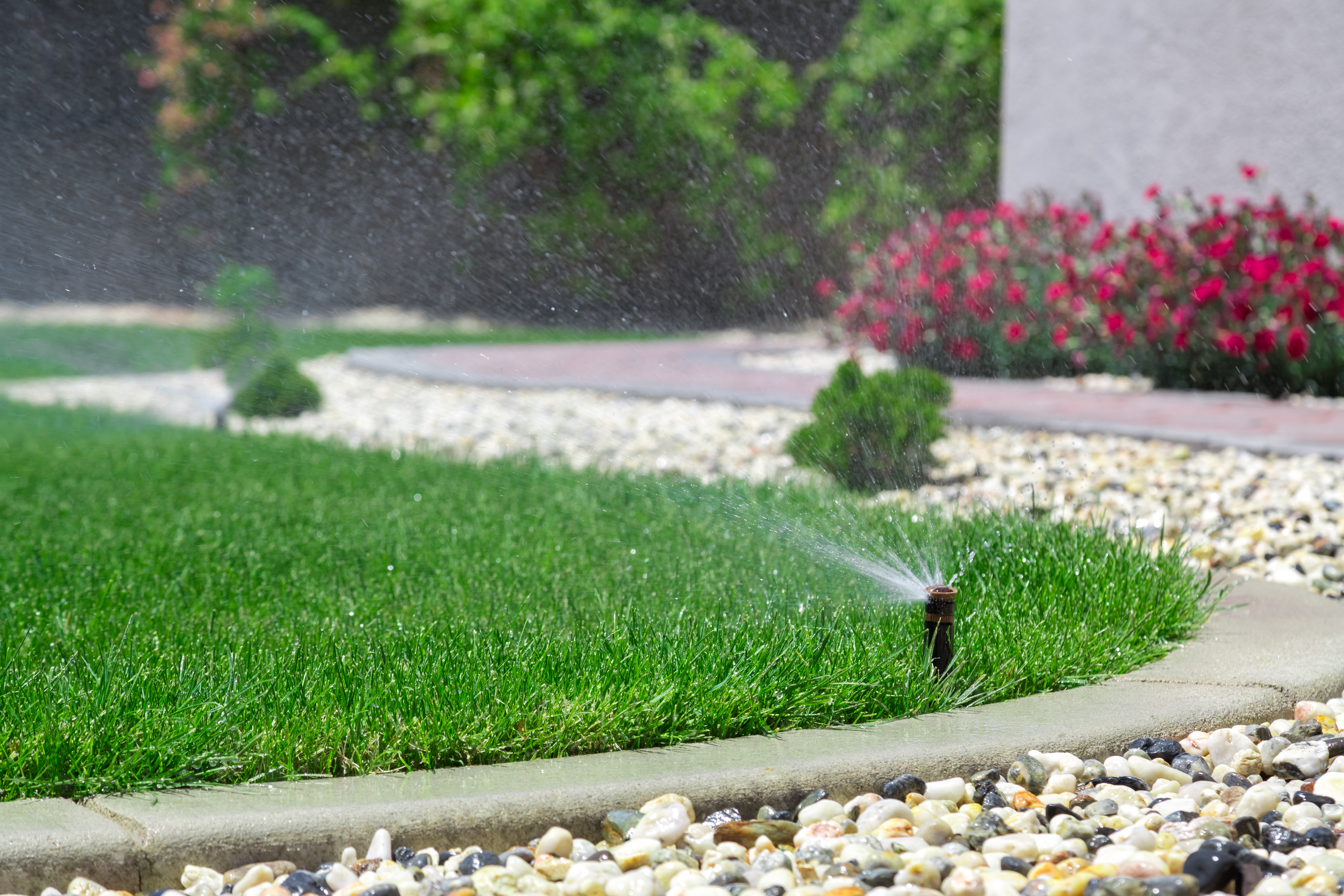
Run the system while you’re home and watch each zone from beginning to end. Look for broken or clogged sprinkler heads, uneven spray patterns, pooling water, misting, overspray, and runoff.
Westchester Joint Water Works recommends adjusting irrigation schedules as seasonal conditions change, keeping water on the landscape instead of pavement, and inspecting systems for leaks and damaged heads. It also notes that different zones may require different schedules based on sun exposure, soil, plants, and sprinkler type.
That last point is easy to miss. A shaded planting bed and a sunny lawn usually don’t need identical watering schedules.
Weather-based and soil-moisture-based controllers can adjust watering according to current conditions rather than relying only on a fixed timer. These products can help reduce unnecessary watering when they’re properly selected, installed, programmed, and maintained. They don’t eliminate the need to inspect the system, though. A smart controller can’t repair a broken sprinkler head.
Water the Lawn Based on Conditions, Not Habit
Established lawns generally need about one inch of water per week and recommends deep, early-morning watering only when needed. It also advises following local watering restrictions.
But one inch is a general guideline, not a rule for every property.
Grass type, soil, shade, slope, rainfall, drainage, and recent planting can all affect how much water a lawn needs. Newly seeded areas and recently installed landscaping may require a different schedule than an established lawn.
A rain gauge or several shallow containers placed across the watering zone can help you see how much water the system is actually delivering. This is often more useful than relying on run time alone because sprinkler heads apply water at different rates.
Watering early in the morning usually gives the soil time to absorb moisture before the hottest part of the day. It can also reduce the amount lost to evaporation compared with watering during intense afternoon heat.
And after steady rainfall, check the soil before automatically running the sprinklers again. Sometimes the smartest watering decision is to skip a cycle.
Consider Drip Irrigation for Planting Beds
Sprinklers aren’t always the most efficient choice for shrubs, trees, and garden beds.
Drip and other micro-irrigation systems apply water slowly near the root zone. This can help reduce overspray, runoff, and evaporation when the system is designed and maintained correctly. Westchester Joint Water Works specifically recommends low-volume micro-irrigation as an option for gardens, trees, and shrubs.
Mulch can also help soil retain moisture, but it shouldn’t be piled against tree trunks, plant stems, or the foundation. Too much mulch in the wrong place can trap moisture and create other problems.
Native or drought-tolerant plants may reduce long-term watering needs once they’re established. That doesn’t mean tearing out an entire landscape. A gradual approach is often more manageable. A difficult strip of grass can become a planting bed, or a high-water area can be redesigned with plants better suited to the site.
Reduce Pool Water Loss
Pools naturally lose water through evaporation, especially during warm, dry, or windy weather. A properly used pool cover can reduce evaporation and limit the amount of replacement water needed. EPA guidance supports using a cover whenever the pool isn’t in use.
Still, frequent refilling shouldn’t automatically be blamed on the weather.
If the water level is dropping faster than usual, inspect the equipment area, pump, filter, visible plumbing, and automatic fill system. A pool service professional may be needed to determine whether the loss is caused by evaporation, splashing, maintenance practices, or a leak.
Small Daily Habits Still Add Up
Turning off the faucet while brushing your teeth, taking slightly shorter showers, running full appliance loads, and sweeping driveways instead of spraying them with a hose can all help reduce unnecessary water use.
But we don’t want homeowners blaming themselves for every high water bill while a toilet or irrigation line leaks around the clock.
So start with the habits you can easily change. Then look at the plumbing system itself.
Fix what’s leaking. Adjust what’s overwatering. Replace inefficient fixtures when the condition of the fixture and your budget make the timing right.
When to Call a Plumber in Westchester County
A professional plumbing inspection may be a good next step when your water usage increases without a clear explanation, your meter moves during a no-use test, a toilet keeps running, or you notice moisture that you can’t trace.
It’s also worth calling when water pressure changes suddenly, fixtures require repeated repairs, or you hear water moving when everything appears to be turned off.
At Flotechs, we help homeowners and property managers throughout Westchester County make sense of these situations without adding more stress. Our team can inspect suspected plumbing leaks, repair toilets and faucets, evaluate aging fixtures, and explain water-saving replacement options when they’re appropriate.
We’ll also be honest when a repair is enough.
Because reducing water waste isn’t about chasing a perfect number. It’s about understanding how your home is using water, correcting the problems that matter, and feeling confident that your plumbing system is working the way it should.
If your Westchester County property seems to be using more water than expected this summer, contact Flotechs to schedule a plumbing inspection. We’ll help you identify the likely cause, understand your options, and decide on a practical next step.